General contractors San Francisco

Hiring a San Francisco general contractor: permits, neighbors, debris

San Francisco's Department of Building Inspection issues a permit only to the property owner, a California-licensed contractor, or an authorized agent of either, and it checks the contractor's CSLB pocket card, city business license and workers' compensation certificate first. Whose name goes on the permit matters, because an owner-builder becomes the responsible party of record. Bigger jobs add neighbor notice, a demolition test under Planning Code Section 317, and permits for street space and debris hauling.

  • Free to request, no obligation to hire
  • Up to five local pros who take this work can reply
  • Rules on this page checked against 30 public sources, November 2026

Start with your job

Which of these is closest to yours?

The Golden Gate Bridge and San Francisco, seen from the Marin Headlands
The Golden Gate Bridge and San Francisco, seen from the Marin Headlands. Photo: Paul.h, Public domain, via Wikimedia Commons.
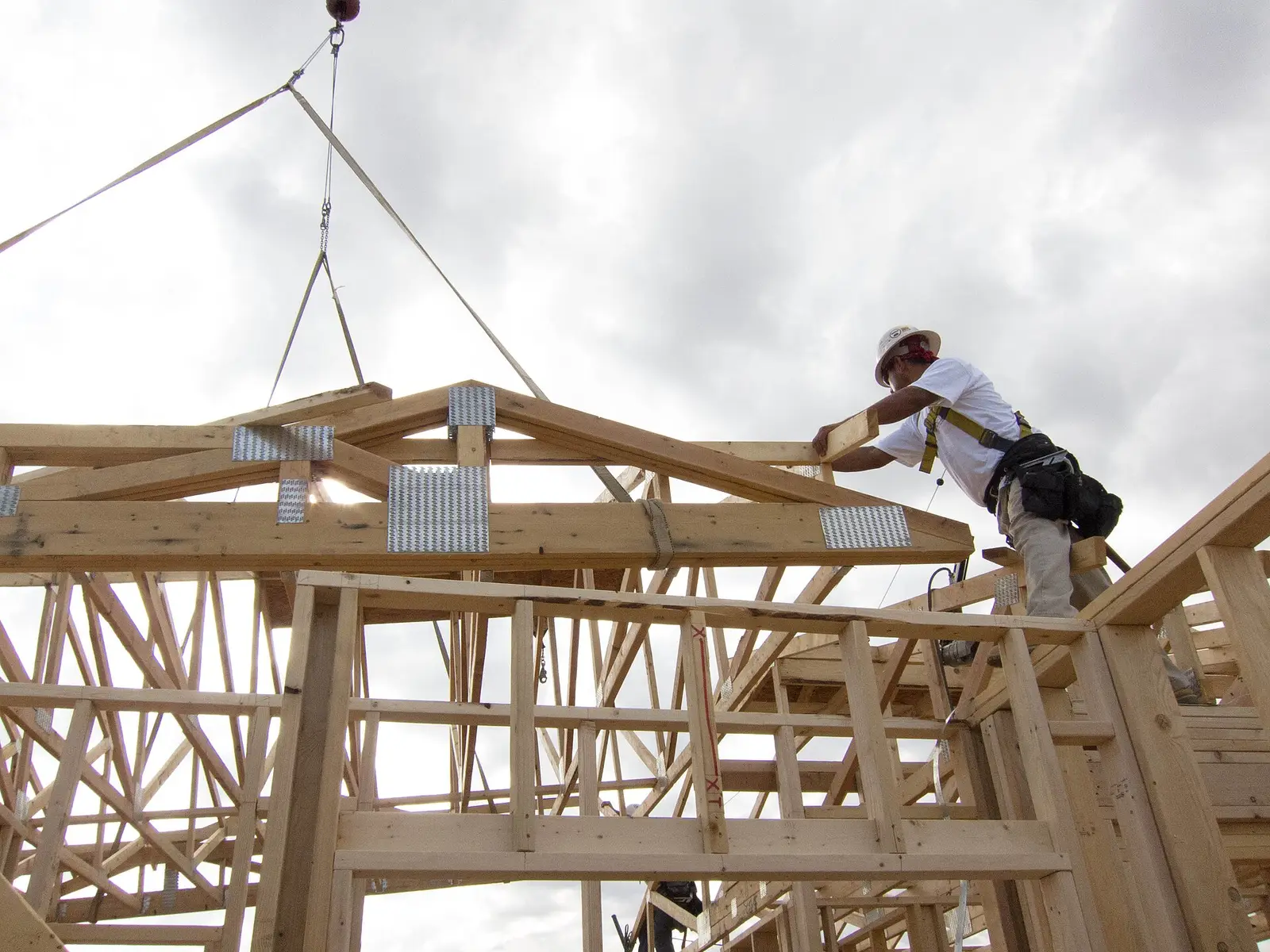
A framer in a hard hat and fall-protection harness guides a roof truss into place on a new house frame
A framer in a hard hat and fall-protection harness guides a roof truss into place on a new house frame. Photo: National Institute for Occupational Safety and Health (NIOSH) from USA, Public domain, via Wikimedia Commons.

The houses here

Twenty-five-foot lots, shared light wells and old wood frames

The Planning Department's Residential Design Guidelines note that most building widths follow the lot width, typically 25 feet, and their advice covers light wells shared with the next building and the open space in the middle of the block. That pattern shapes a general contractor's job before anything is drawn: materials are staged in the street, a basement dig runs beside a neighbor's foundation, and an addition is judged against the houses on both sides. The stock is old, too. Roughly 48,000 Victorian and Edwardian houses went up between 1849 and 1915, many of them modest wooden houses, and Planning treats any building over 50 years old as a possible historic resource under state environmental review. A wood-frame house can fall within a B-2 remodeling license; a concrete or masonry building cannot.

Free, no obligation. Next, add your details in the request form.

Neighbourhood by neighbourhood

Neighborhoods where the Planning Code draws its own envelope

  1. Bernal Heights

    Section 242 sets the Bernal Heights Special Use District apart for its hillside lots, generally smaller than elsewhere. A dwelling is generally held to 30 feet, rear yards take 35 percent of a shallow RH-1 lot and 45 percent in RH-2 and RH-3, and an RH-1 house must give up 650 square feet of usable floor area from its permitted envelope, 400 on lots deeper than 100 feet. New curb cuts stop at 10 feet and garage openings at 12.

  2. Dolores Heights

    Section 241 swaps the usual RH-1 rear yard and height rules for its own: a rear yard of 45 percent of the lot depth, never under 25 feet, and no part of a building more than 35 feet above the lot's existing grade, an envelope that tilts with the slope. A variance may relax either rule but cannot push a building past the RH-1 height limit.

  3. Westwood Park

    In this Residential Character District, Section 244.1 holds new houses and alterations to the city's Residential Design Guidelines as amended by the Westwood Park Association's own, adopted by Planning Commission Resolution 13992. The Zoning Administrator may require changes to siting, building envelope, scale, detailing, openings and landscaping, so the association's guidelines belong on the designer's desk from the first sketch.

Free request

Describe the general contracting job once. Local pros who take work in San Francisco reply by call or text.

  • No fee to request, and no obligation to hire
  • You agree scope and price with the pro you choose
  • Photos help them quote without a first visit

Get quotes for general contracting work in San Francisco

Two short steps. A local pro who takes this work calls or texts you back.

To send a request, call or text (415) 449-8213.

Free to request, and you agree the scope and price with the person you hire before work starts. In California, a job over $1,000 in labor and materials, or one that needs a building permit, must be done by a contractor licensed by the CSLB in the right class. Ask for the license number and check it at cslb.ca.gov.

The work

Jobs big enough that one contractor has to run them

  1. Digging out a basement beside the house next door

    Lowering a garage floor or digging a new basement on a city lot means excavating right against a neighbor's building. DBI's bulletin on site permits, AB-032, says each adjoining building needs its own permit for underpinning, that tie-back anchors reaching under the neighbor's lot need that owner's written permission, and that the applicant should give the notice Civil Code Section 832 calls for. Where a site lies in an area covered by the Maher Ordinance, the SFPUC notes that disturbing more than 50 cubic yards of soil brings investigation, site management and reporting under Health Code Article 22A.

  2. Turning two flats back into one house

    Creating an open connection between two units, such as a new interior stair, is a Residential Merger under Planning Code Section 317 when it reduces the number of units. Enlarging one unit while shrinking another by more than 25 percent of its floor area counts too, even with the unit count unchanged. The section opens with a finding that existing housing is a resource in need of protection, and it calls for a public hearing before approving work that would merge units or reconfigure a Residential Flat, with certain exceptions. That belongs in the schedule before any wall comes down.

  3. A gut remodel that crosses into demolition

    The same section decides when a remodel is, legally, a Residential Demolition. Since an ordinance that took effect in February 2026 the test is a single one: removing 50 percent or more of the combined front and rear facades and 50 percent or more of the Horizontal Elements, which the Code defines as all roof areas and floor plates above grade, measured by actual surface area. A project that meets it must replace every unit it demolishes, and demolishing a residential unit goes through a Conditional Use Authorization at the Planning Commission unless the project qualifies for an exemption.

  4. Building in phases under a site permit

    A large project can be permitted in stages through a site permit, which DBI issues on conceptual drawings. Among the peer jurisdictions it studied, the Permit Center found only San Francisco uses a building permit for this stage, one that in its words does not let you build anything. Construction is then approved addendum by addendum under Administrative Bulletin AB-032: grading, foundation, superstructure, mechanical and electrical, and a final addendum. Only work on plans bearing DBI's stamp of approval may proceed, the approved set stays on site for inspectors, and work beyond it is stopped.

  5. Exterior work on a landmark or in a historic district

    San Francisco has more than 300 Article 10 landmarks and over 1,110 lots inside Article 10 historic districts. Exterior work there that needs a permit, even on a non-contributory building in a district, first needs a Certificate of Appropriateness, or the administrative version for minor scopes the Historic Preservation Commission has delegated to staff, before the building permit. Some districts require one for street-visible changes that need no permit at all. Repairs with in-kind materials are exempt, and Article 10 does not designate the interiors of houses in landmark districts.

Permits and local rules

Who answers for what on a permitted city job

  1. Who DBI will hand a permit to

    DBI's issuance checklist says only property owners, state-licensed contractors or their agents may apply, and a tenant cannot pull a permit without the owner's written authorization. On a contractor's job the counter verifies a workers' compensation certificate, a San Francisco business license and the CSLB pocket card showing the license and its classification. An agent needs an authorization dated within the past 30 days, and an LLC member applying as owner-builder has to prove ownership, for example through the Secretary of State's business records.

    Source: SF Department of Building Inspection (sf.gov)

  2. What an owner-builder signs

    An owner applying as owner-builder initials each statement on DBI's disclosure form before the permit is issued. It warns that people working without a license frequently have the owner take out an owner-builder permit, that the owner becomes the responsible party of record, and that engaging anyone other than licensed contractors may make the owner an employer, with payroll taxes and workers' compensation to provide. Quoting Business and Professions Code Section 7044, it adds that an owner-builder structure cannot legally be sold unless licensed contractors built all of it, except a personal residence the owner lived in for at least a year before the work was completed.

    Source: SF DBI, Property Owner's Disclosures form (sf.gov)

  3. Business registration reaches out-of-town firms

    Anyone who performs work in San Francisco on all or part of any seven days in a calendar year, or drives its streets for business that often, has to register with the Treasurer and Tax Collector within 30 days of starting and renew every year by the end of February. Registration produces a Business Account Number, which the city asks for on other permits, and DBI's Licensed Contractor's Statement lists a current San Francisco business license among its required documents.

    Source: SF.gov, Office of Small Business (sf.gov)

  4. Debris has to be recycled, and tracked

    Under Ordinance 144-21, construction and demolition debris removed from a San Francisco project must be recycled or reused, never sent to a landfill. Since January 1, 2022, a hauler of mixed debris needs an Environment Department permit for each debris box or vehicle it uses, and a box placed in the public right of way also needs a Public Works street space permit. Owners hauling debris from their own property in their own vehicles are exempt from the hauling permit. When DBI flags a permit, the project must recover at least 65 percent of its discards, 75 percent for a full demolition, through a Material Reduction and Recovery Plan filed in Green Halo.

    San Francisco Environment Department (opens in a new tab)

State license for this work: B General Building, B-2 Residential Remodeling. Look up a contractor's license on the CSLB website (cslb.ca.gov).

Before you hire

Settle these with the contractor before anything is signed

  • Ask whose name goes on the permit. CSLB says the contract should state who gets the permits, and an owner-builder permit leaves you as the responsible party of record.
  • Check the license at cslb.ca.gov: structural changes, a new story or a concrete or masonry building call for B General Building, while B-2 covers non-structural remodels of an existing wood-frame home.
  • Ask for proof of the contractor's San Francisco business registration and a current workers' compensation certificate, since DBI checks both before it issues the permit.
  • If the dig goes below the neighbor's foundation, ask who sends the Civil Code 832 notice, who designs the underpinning, and who applies for its separate DBI permit.
  • Ask who files the recycling plan and weight tickets in Green Halo if DBI flags the permit, and whose street space permit covers the debris box.

Timing

Work hours, notice windows and appeal clocks

DBI allows building construction from 7 a.m. to 8 p.m. every day of the week, holidays included. Outside those hours, Police Code Section 2908 bars work louder than 5 dBA above ambient at the nearest property plane unless DBI or Public Works grants a special permit, which DBI wants requested at least 10 business days ahead, with notices to every residence within 300 feet. Where Section 311 notice applies, owners and residents within 150 feet get a 30-day review period. A Discretionary Review request filed in that window moves the decision to a Planning Commission hearing, typically within 12 weeks, and an issued permit can be appealed to the Board of Appeals within 15 days.

Free, no obligation. Next, add your details in the request form.

Questions

Hiring questions San Francisco owners raise

Can my tenant or my contractor's office staff pick up our San Francisco permit?

Only as an agent. DBI will not issue a permit to a tenant unless the owner signs the authorization of agent on the Property Owner's Disclosures form, and a contractor's staff member needs the contractor's authorization on the Licensed Contractor's Statement. Either authorization must be dated within the past 30 days, and a contractor's agent also brings proof of the contractor's license and classification. The owner's signature is checked against a government-issued ID or a notarized form.

Does a contractor based in Oakland need a San Francisco business registration?

Usually, yes. The city's rule covers anyone who performs work in San Francisco on all or part of any seven days in a calendar year, even a firm with no office here, and registration is due within 30 days of starting. DBI must verify the contractor's information before it issues a permit, and its contractor statement lists a current San Francisco business license, so a contractor without one can hold up the job.

Does raising our house or filling in a window count toward a demolition?

It can. Planning Code Section 317 treats the infill of an existing exterior opening as a removal, and it counts elevating an entire building, regardless of height, as removal of its floors and roofs for the demolition test. Moving a whole building to another location is not counted. Neither is replacing exterior elements with like materials to answer a DBI Corrections Notice, as long as the removed element does not grow and the building gains no volume.

Can the contractor take over the parking in front of our neighbor's house?

Not under a standard permit. A Public Works street space permit lets materials and equipment sit only along the frontage of the property being worked on, in the parking lane and no more than half the sidewalk width, with a four-foot pedestrian path kept clear. Needing more than that, for example when no parking is available in front of the property, takes an additional street space permit. Tow-away signs have to be posted at least 72 hours before the space is used.

Our neighbor is digging a basement beside our house. What does state law give us?

Civil Code Section 832 requires reasonable notice stating how deep the excavation will go and when it will begin. If it will be deeper than your walls or foundation and close enough to endanger them, you must be allowed at least 30 days to protect or extend them. If it goes below the standard depth of nine feet under the curb and your foundation reaches that depth, the excavating owner, given access to your land, must protect your building at no cost to you, apart from minor settlement cracks.

Does The Handyman SF build or manage San Francisco projects?

No. The Handyman SF holds no contractor license and does not build, manage or supervise any work. A request sent from this page goes to up to five local contractors who take this kind of work, and you deal with them directly. The Handyman SF does not check licenses, so whoever you pick, look up the license number and its classification on the CSLB website, cslb.ca.gov, and ask for proof of workers' compensation coverage before you sign a contract.

Where these facts come from

Checked against these public sources in November 2026. Rules and programs change: confirm permit requirements with the city before work starts, and a contractor's license on the CSLB website.

General contracting work in San Francisco? Tell us what you see.

One request reaches local handymen and contractors who take this work. The Handyman SF connects you with them; it does not do the work.

HandymanNow for handymen Work in San Francisco? Get job leads by text. Pick your trades and areas, take only the jobs you want. No subscription. Start getting leads HandymanNow for homeowners Get the HandymanNow app. Send a request with photos, message your handyman and follow them on the way. Download the app

HandymanNow app

Fix it faster. Find work faster.

Homeowners send a job with photos and follow their handyman on the map. Handymen get local jobs by text and take only the ones they want.

Call WhatsApp (opens WhatsApp) Free quote