Garage doors and openers under California's battery backup law
Replacing a garage door or opener in the Bay Area runs into a state law written after the 2017 Wine Country fires: since July 1, 2019, a residential automatic opener sold or installed in California must have a battery backup, and a new door may not be hooked to an old opener without one. In San Francisco, replacing a garage door qualifies for an over-the-counter permit.
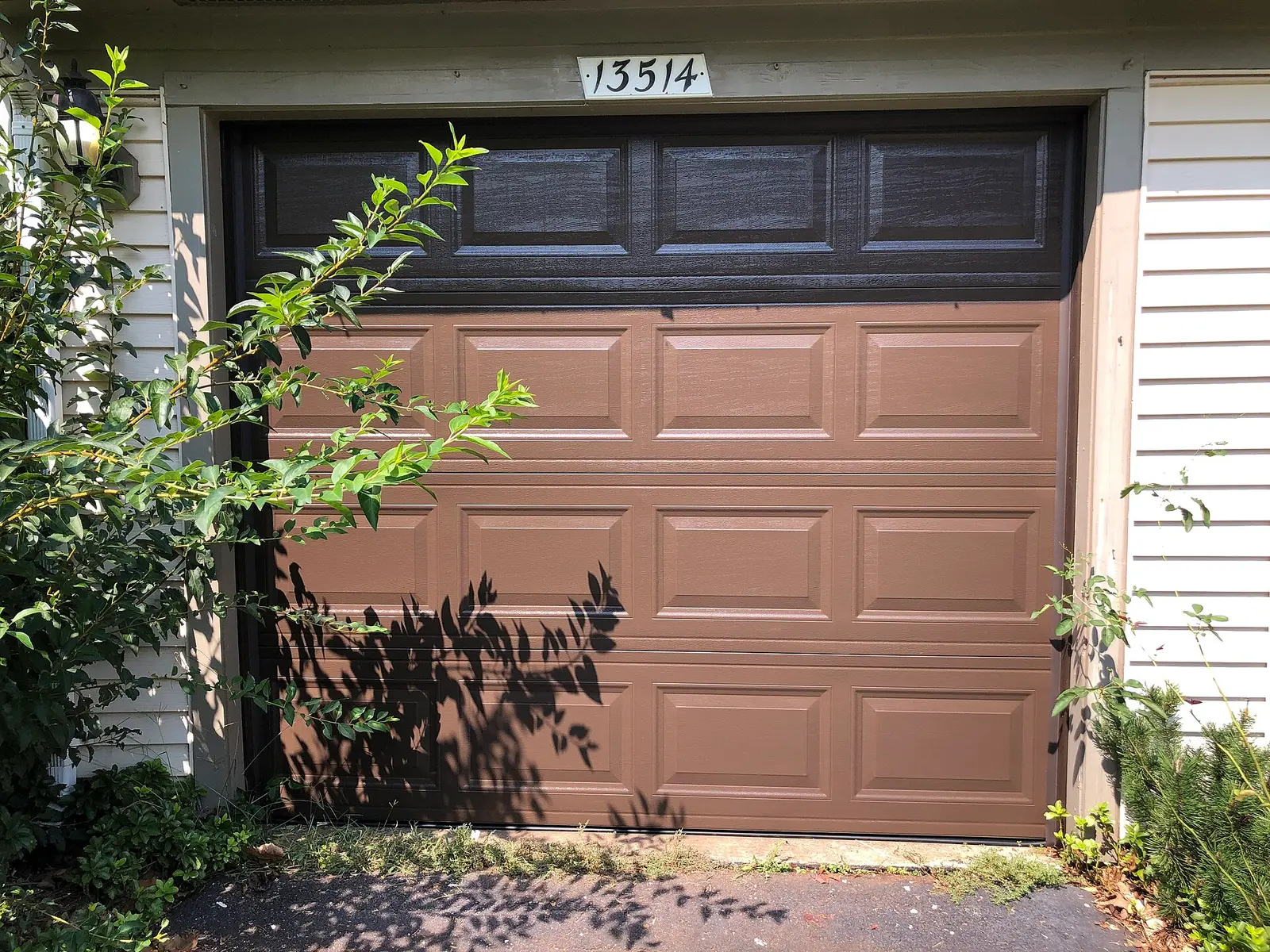
A newly installed brown metal garage door on a single-car garage. Photo: Famartin, CC BY-SA 4.0, via Wikimedia Commons.
CSLB license class
D-28 Doors, Gates and Activating Devices, B General Building
Where it applies
North Bay, San Francisco, East Bay
Request
Free, up to three local pros reply
Garage door jobs on Bay Area homes
Replacing an automatic opener
A new opener has to clear three layers of California law. Since 1991 openers sold in the state must have an automatic reverse safety device meeting UL 325. Since January 1, 1993 an opener must also require a tactile edge sensor, an optical sensor or a similar device before it will run. And since July 1, 2019 it must have a battery backup designed to operate during an electrical outage. The 1993 and 2019 rules both name installers as well as sellers, so an old stock unit without them is not an option.
A new door on an old opener
Replacing only the door is where the battery backup law catches people. Health and Safety Code Section 19892 says a replacement residential garage door may not be installed in a way that connects it to an existing automatic opener without a battery backup, no matter when that opener was made. If the opener predates the backup requirement, a door-only job can become a door-and-opener job, and it is better to learn that at the estimate than on installation day.
Service calls and the two-inch test
State law puts a specific duty on anyone hired to service or repair a residential automatic garage door opener. When the work is done, they must check whether the door reverses on contact with a rigid obstacle two inches high placed on the floor beneath it. If it does not, they must fill out and conspicuously attach a red warning notice to the opener describing the failure. The test takes minutes and is worth watching.
Doors for recessed Sunset garage openings
SF Planning's survey of the Sunset's 1920s and 1930s tracts records garage openings in a variety of alternating shapes, some deeply recessed under a barrel-front bay with a tradesman's door set inside the opening, and paneled garage doors with multi-light windows on other tracts. A standard sectional door does not always fit those openings or that look. In San Francisco, replacing a garage door is an over-the-counter permit, while an exterior door in a new location needs plans.
Closing the gaps in a fire hazard zone
Where it applies, Chapter 7A of the 2022 California Building Code, the chapter on construction in fire hazard severity zones and wildland-urban interface areas, requires exterior garage doors to keep gaps at the bottom, sides and top of the door to no more than 1/8 inch so embers cannot get in. It accepts three methods: weatherstripping that passes set tests for weathering and flammability, a door that overlaps its jambs and header, or jambs and headers covered with metal flashing.
Adding or widening a garage opening
Cutting a new garage opening, or widening one for a two-car door, is framing and planning work before it is door work. SF Planning says inserting a new garage opening can have a major impact on a historic resource, reviews new garages case by case, and in some instances does not approve them where they would harm features such as a front setback, bay windows, a porch or a historic fence. Its Guidelines for Adding Garages and Curb Cuts set out the criteria.
The license this work needs
D-28 Doors, Gates and Activating Devices
B General Building
Garage doors and their openers fall under the CSLB's D-28 Doors, Gates and Activating Devices class, a limited specialty covering the installation, modification and repair of overhead and sliding door assemblies, power-activated doors and gates, and low-voltage or manual door hardware. A B General Building contractor handles the framing when an opening changes size. A new electrical circuit for an opener is work for a licensed electrician. Check any license number at cslb.ca.gov.
The California Public Utilities Commission allows PG&E and other utilities to turn power off to specific areas when they reasonably believe strong winds could topple lines or cause vegetation contact that raises wildfire risk. Those Public Safety Power Shutoffs come with the same wind conditions that drive wildfires, which can be exactly when a household needs to drive out. A garage door that only opens on grid power is a problem on those days, and that is the gap the battery backup law closes for new openers.
Garages built into the front of the house
Sunset District tract houses from the 1920s onward put the garage into the ground story, with living areas above a combined garage and basement space, instead of the detached garage common in other Bay Area tracts of the period. SF Planning describes the result as a uniquely San Franciscan landscape of nearly attached houses with prominent ground-story garages. On those blocks the garage door is a large share of the street facade, so its size, recess and panel pattern matter to how the house reads.
Hazard zones reach garage doors too
The State Fire Marshal's Fire Hazard Severity Zones rate land Moderate, High or Very High from fuel, terrain, embers and fire weather, and the building rules tied to those zones cover more than roofs and vents: the 2022 wildfire chapter of the California Building Code includes a perimeter gap limit written specifically for garage doors. Check the state map, then ask the local building department whether a replacement door at your address must meet that limit before choosing a product.
The battery backup law came out of the North Bay. After the October 2017 Wine Country fires, the remains of at least five people were found where garages had stood, and State Senator Bill Dodd introduced Senate Bill 969 after being unable to open his own wooden garage door when the power failed in his Napa neighborhood. It became law in 2018 and applied to openers from July 1, 2019. For houses in the fire country north of the Bay, a backup-equipped opener is the direct answer to what happened that October.
San Francisco lists garage door replacement among exterior projects that qualify for over-the-counter review at the Permit Center, and every building permit application there also needs the city's Green Building form. Contractors must register with the city before applying, and the permit's job card must be in hand before work starts. On a historic building, a proposal to add a garage is reviewed by Planning case by case.
Berkeley's Fire Zone Two combines the city's Combined Hillside District with land CAL FIRE maps as Very High, and its guideline applies the zone's wildfire rules to alterations and repairs as well as new buildings. One rule there touches garage projects directly: carports, patio covers and similar accessory structures must be built of noncombustible or ignition-resistant materials, so a garage door job that grows into a new carport is held to it.
Permits and rules to know
California's battery backup requirement
Senate Bill 969 added Section 19892 to the Health and Safety Code and amended Section 19891 to set a civil penalty for each opener that violates it. Since July 1, 2019 no person or company may manufacture for sale, sell or install in California a residential automatic garage door opener without a battery backup, and the rule also reaches commercially manufactured openers installed in residential applications. The penalty is counted per opener, so a contractor has every reason to refuse a non-compliant unit.
Garage door permits in San Francisco
San Francisco's Department of Building Inspection treats a garage door replacement as an exterior residential project eligible for over-the-counter review, alongside in-kind window and siding replacement and minor dry rot repair. A contractor fills out the contractor statement and an owner the owner package, and the building permit application is brought to the Permit Center. New exterior doors in new locations, and street-visible facade work that changes finishes, need plans drawn by a designer, architect or engineer.
Before you hire
Check the installer's D-28 license number at cslb.ca.gov, and ask who will handle any new outlet or circuit.
Get it in writing that the new opener has a battery backup designed to work during a power outage.
If only the door is being replaced, ask whether the existing opener has a battery backup before signing.
After any repair, ask to watch the door reverse on a two-inch-high obstacle placed beneath it.
In a mapped fire hazard severity zone, ask which method will keep gaps around the door to 1/8 inch.
For a recessed or shaped Sunset opening, ask whether the door is built to fit the opening or adapted with trim.
Ask for proof of workers' compensation coverage and their liability insurance certificate before work starts.
How a request works
Describe the job
A few sentences and a photo of the problem or the space. It takes about a minute.
Local pros get in touch
Up to three handymen or contractors who take this kind of work may call or text to ask questions and quote.
Check, compare, decide
Look up the license, compare what you hear, and agree the scope and price with the one you pick. Requesting costs nothing.
Questions about garage door work in the Bay Area
Do I have to replace my working opener just because it has no battery backup?
Not by that fact alone. Section 19892 governs openers being manufactured, sold or installed from July 1, 2019 on, and it bars connecting a replacement garage door to an opener without a backup. So an existing opener becomes an issue when you replace the opener or the door. Where fire-weather power shutoffs happen, upgrading before either one wears out can still be worth considering.
What does it mean if a repair person puts a red notice on my opener?
It means the opener failed the reverse test that California requires after any service or repair. The person is required to check whether the door reverses when it touches a rigid two-inch-high obstacle on the floor, and if it does not, to fill out and attach a red warning to the opener. Treat it as a safety defect to fix before the door is used again.
Are photo-eye sensors on a garage door opener required by law?
Some form of sensor is. Since January 1, 1993, California has barred the sale or installation of a residential automatic garage door opener unless it requires a tactile edge sensor, an optical sensor or a similar device in order to operate, designed to reopen a closing door and keep an open door from closing. An installer should not disable or bypass it.
Why does our Sunset garage have a small door inside the big opening?
It is part of the original design. SF Planning's historic survey of the Sunset's Mediterranean Revival tracts describes early houses from 1927 with a tradesman's door located within a deeply recessed garage opening, under a projecting barrel-front bay. When replacing the garage door on a house like that, measure the whole recess and keep that entry in mind rather than planning around a single rectangle.
Can we add a garage to our historic San Francisco house?
Possibly, but it is not a routine permit. SF Planning reviews new garages on historic resources case by case because a new opening can change the building's character, and it sometimes refuses them where a front setback, bay windows, a front porch or a historic fence would be harmed. Read its Guidelines for Adding Garages and Curb Cuts before paying for design work.
Checked against these public sources in September 2026. Codes and programs change: confirm permit rules with your city's building department and a license on the CSLB website before work starts.