Electrical Campbell

Campbell electrical permits, from a 125-amp panel to automatic solar approval

Campbell sorts home electrical work into two permit groups. A service upgrade or whole-house rewire is a general trade permit, filed by a C-10 contractor or an owner-builder, and a rewire needs plans. Rooftop solar, chargers, batteries and panel replacements, relocations or upsizes use the renewable-energy permit, where a qualifying solar job can skip plan check altogether. On every one of those plan sets, only PG&E removes or replaces a meter or service connection.

Load worksheet trigger
An existing main panel of 125 amps or less
Renewable-energy permit
Solar, chargers, batteries; panel replacement, relocation or upsize
Meters and service drops
Removed and replaced by PG&E only, per the city's solar guide
Homes built since 2010
759 units, 4.3 percent of the housing stock
  • Free to request, no obligation to hire
  • Up to five local pros who take this work can reply
  • Rules on this page checked against 12 public sources, October 2026
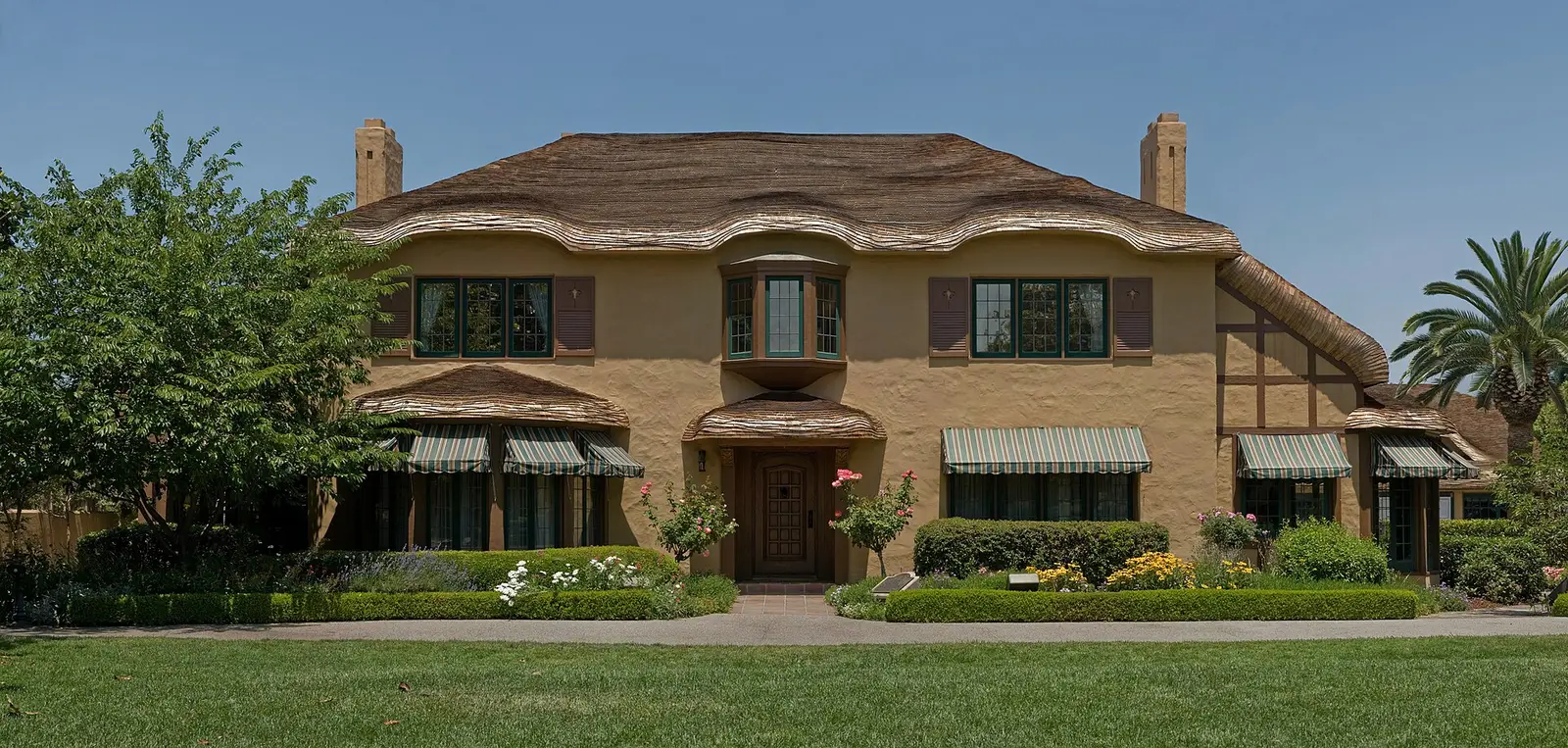
The Ainsley House in Campbell
The Ainsley House in Campbell. Photo: JaGa, CC BY-SA 3.0, via Wikimedia Commons.

Permits and local rules

Campbell documents that decide how an electrical job is filed

  1. General Trade Permits (MEP) Application Guide

    Service upgrades, whole-house rewires and temporary power poles are general trade permits, assigned to C-10 electrical contractors; an owner-builder may also take the first two, but a temporary pole is C-10 only. Plans are required for new electric panels, as opposed to replacements, and for whole-house rewires. A temporary pole's service drop must clear 12 feet over the property, 16 feet over the curb and 18 feet over the street, and an underground temporary service brings in Building, Planning, Engineering and PG&E before approval.

    Source: City of Campbell Building Inspection Division (ci.campbell.ca.us)

  2. Renewable Energy Systems guide (Simple Construction, Part II)

    Applications go through the MGO Connect platform, from a computer or the free mobile app. Each plan set carries the same notes: interconnected smoke alarms in every bedroom with a combination smoke and carbon monoxide alarm in the adjoining hallway, a torque wrench on site so the contractor can torque breakers and terminal lugs in view of the inspector, the statement that only PG&E removes and replaces meters and service connections, and whether the house has fire sprinklers or a fire alarm. Owners can confirm the alarms on the city's self-certification form.

    Source: City of Campbell Community Development Department (campbellca.gov)

  3. Historic Preservation Ordinance, Chapter 21.33

    Every building permit application affecting a resource on the Historic Resource Inventory is reviewed by the Community Development Director. Ordinary maintenance and repair, defined as in-kind replacement with equivalent material, is not an alteration, and the city's own answers say interior changes and rooftop solar follow the same rules as any other house, with panels kept out of view from the street where possible. An exterior alteration to a Landmark or a historic district property goes to the Historic Preservation Board as a Tier 1 permit within 30 days of a complete application.

    City of Campbell Municipal Code, Chapter 21.33 (opens in a new tab)

State license for this work: C-10 Electrical. Look up a contractor's license on the CSLB website (cslb.ca.gov).

Free, no obligation. Next, add your details in the request form.

The work

Electrical work that Campbell's application guides spell out

  1. Upgrading the service

    A C-10 contractor or an owner-builder takes the permit, and plans are needed for a new panel but not for a straight replacement. The guide lists what the inspector checks: a load calculation if the existing panel is 125 amps or less, a Ufer ground or two ground rods 6 feet apart near the panel, a water-pipe bond within 5 feet of where the line enters, and no bond to the gas pipe. Panel and breakers must match in make and type, every breaker is labeled, and the panel keeps 15 inches clear on each side and 36 inches in front.

  2. Rewiring the whole house

    The plans darken every new switch and outlet on the floor plan, with no point along a wall more than 6 feet from an outlet and no spot on a kitchen counter more than 24 inches from one. Arc-fault protection covers bedrooms, living spaces, closets, hallways and lighting; ground-fault covers baths, garages, exteriors and crawlspaces; kitchens and laundry areas get both. Hardwired smoke alarms go in each bedroom, combination smoke and carbon monoxide alarms outside them and on every floor, and exterior lighting runs on photocell and motion control.

  3. A charger or a battery in the garage

    Both belong on the renewable-energy permit. The site plan labels the size of each panel, says whether the service wires are overhead or underground, and shows a working space 30 inches wide and 36 inches deep in front of new equipment. In a garage the floor plan also shows protection from vehicles where needed, such as bollards or a raised mounting height, and how a battery is shut down quickly. A charger, battery or panel rework filed by itself may go in as a standard electrical permit instead.

  4. Solar with automatic approval

    A residential rooftop system, which may include a battery, a charger or panel rework, qualifies when a B, C-10, C-46 or C-39 contractor installs it over a serviceable, watertight composition roof still under warranty. The applicant answers yes to every qualifying question, slides the Automatic Approval toggle, and the permit issues once payment is received, with no plan check. The inspector then compares the installation with the plans and the answers given, and any difference means a revision.

  5. Electric gates, generators and powered sheds

    Campbell's ancillary-structures guide requires a building permit for every electric gate, whatever its height, and warns that a standby generator may need a land use permit from the Planning Division first. A shed or other accessory structure under 120 square feet escapes a building permit only if it has no electrical, plumbing or mechanical utilities, so running power to one brings it into the permit system, with its wiring, meters and panels drawn on the plans.

Free request

Describe the electrical job once. Local pros who take work in Campbell reply by call or text.

  • No fee to request, and no obligation to hire
  • You agree scope and price with the pro you choose
  • Photos help them quote without a first visit

Get quotes for electrical work in Campbell

Two short steps. A local pro who takes this work calls or texts you back.

To send a request, call or text (415) 449-8213.

Free to request, and you agree the scope and price with the person you hire before work starts. In California, a job over $1,000 in labor and materials, or one that needs a building permit, must be done by a contractor licensed by the CSLB in the right class. Ask for the license number and check it at cslb.ca.gov.

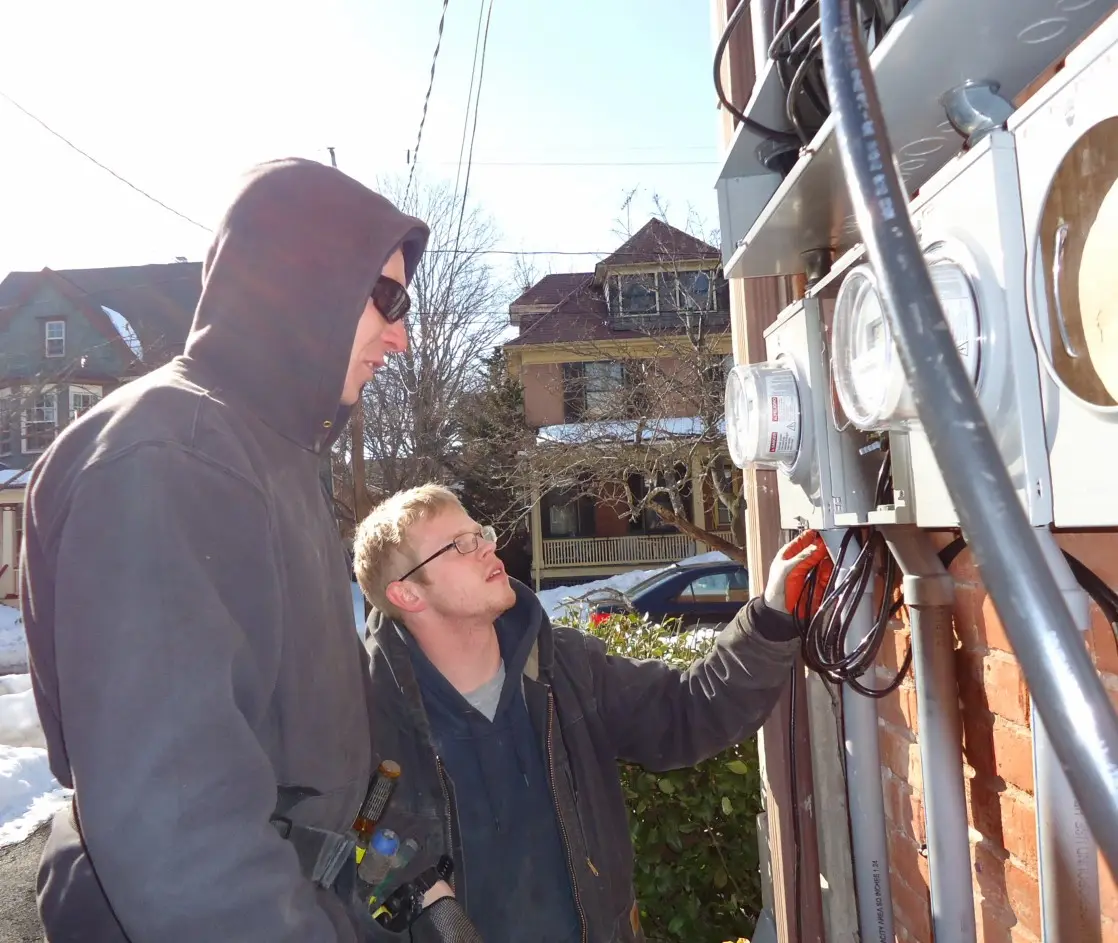
Electricians inspecting the electrical panels and meters on a multifamily house
Electricians inspecting the electrical panels and meters on a multifamily house. Photo: Tomwsulcer, CC0, via Wikimedia Commons.

The houses here

Few new houses, a big postwar stock and bungalows on Alice Avenue

Campbell's Housing Element counts only 759 homes built since 2010, 4.3 percent of the stock, so nearly every electrical job here is work on an existing house. The largest group dates from the two decades after 1960, when the population doubled, and those houses have drywall interiors; the Craftsman bungalows of the Alice Avenue Historic District go back to the 1920s. The city's trade-permit guide is written for that mix. When a rewire opens walls, the plans must show where the sheetrock comes off, and every opened cavity gets R-13 insulation in exterior walls and R-30 at the ceiling. Where the service wires arrive underground rather than overhead, the guide warns, they may limit how far the service can be upsized.

Part by part

Two Campbell neighborhoods where electrical work takes another path

  • Alice Avenue Historic District

    Its 1920s bungalows are historic district properties, so an electrical permit there passes the Community Development Director first. Rewiring behind the walls is treated like work on any other house. A change to how the outside looks, such as a new service mast or a meter moved on the street side, can become an exterior alteration for the Historic Preservation Board, and city staff can explain the alternatives the California Historical Building Code allows.

  • San Tomas Area

    The city's 1993 neighborhood plan keeps this district low-density, on lots that are often big and irregular, along streets that lack standard curbs and sidewalks. New development on streets listed in the San Tomas Street Improvement Plan may have to add curb, gutter, sidewalk and street lights, unless the City Engineer accepts a deferred improvement agreement, and power to a detached workshop on one of those lots is permit work.

Questions

Campbell homeowners' electrical questions

Will replacing our panel in Campbell force us to add arc-fault breakers everywhere?

No. Campbell's trade-permit guide says a panel replacement does not trigger the arc-fault and ground-fault requirements, though it recommends the upgrade. A whole-house rewire is different: its plans must show arc-fault protection in bedrooms, living areas, closets, hallways and lighting, ground-fault protection in baths, garages and outdoors, and combination protection in kitchens and laundry areas.

Can we put solar on our historic Campbell home's roof?

Yes. The city's historic preservation answers say rooftop solar on a historic home has the same requirements as on any other house, with a preference that the panels not be visible from the public street. A qualifying system can also use the automatic approval route, which issues the permit on payment and leaves the check to the inspector on site.

Who takes the meter off during a Campbell service upgrade?

PG&E. Campbell's renewable-energy guide has every plan set state that only PG&E can remove and replace meters and service connections, and its temporary-power rules bring PG&E in before any underground service is approved. Ask the electrician who will request the utility's disconnect and reconnect, and when.

Do we need a permit to run power to a small shed in Campbell?

Yes, once it has power. An accessory structure under 120 square feet is exempt from a building permit only when it has no electrical, plumbing or mechanical utilities. Running a circuit makes it permit work, and the plans then show where the wiring runs and the panel or subpanel that serves it.

Does a backup battery need its own permit in Campbell?

It can share one. The renewable-energy permit covers rooftop solar with or without a battery, and a battery filed alone may go in as a standard electrical permit instead. Either way the plans show where the battery sits, its working clearance, protection from vehicles in a garage and the method for shutting it down quickly.

Free, no obligation. Next, add your details in the request form.

Before you hire

Before a Campbell electrician files in MGO Connect

  • Ask whether the job goes in as a general trade permit or on the renewable-energy permit, and who uploads the plans.
  • With underground service wires, ask early whether the existing conduit and conductors limit how far the service can be upsized.
  • For automatic solar approval, confirm the roof is composition, watertight and under warranty, and that the installer holds a B, C-10, C-46 or C-39 license.
  • If the house is on the Historic Resource Inventory, have any meter or mast change cleared with Planning before the electrical permit is filed.
  • Look up the license on the CSLB website and confirm the C-10 Electrical classification is active.

Where these facts come from

Checked against these public sources in October 2026. Rules and programs change: confirm permit requirements with the city before work starts, and a contractor's license on the CSLB website.

  • ci.campbell.ca.us: General Trade Permits MEP Application Guide (ci.campbell.ca.us)
  • campbellca.gov: AppGuideSimple Construction Part II 2024 Final Solarapp (campbellca.gov)
  • ci.campbell.ca.us: Simple Construction Part I Application Guide (ci.campbell.ca.us)
  • campbellca.gov: Building Application Guides (campbellca.gov)
  • campbellca.gov: Building Inspection Division Home (campbellca.gov)
  • campbellca.gov: Electrify Your Home (campbellca.gov)
  • library.municode.com: code of ordinances
  • campbellca.gov: Frequently Asked Questions (campbellca.gov)
  • campbellca.gov: STANP (campbellca.gov)
  • campbellca.gov: 2953 (campbellca.gov)
  • svcleanenergy.org
  • cslb.ca.gov: Licensing Classifications Detail (cslb.ca.gov)

Electrical work in Campbell? Tell us what you see.

One request reaches local handymen and contractors who take this work. The Handyman SF connects you with them; it does not do the work.

HandymanNow for handymen Work in Campbell? Get job leads by text. Pick your trades and areas, take only the jobs you want. No subscription. Start getting leads HandymanNow for homeowners Get the HandymanNow app. Send a request with photos, message your handyman and follow them on the way. Download the app

HandymanNow app

Fix it faster. Find work faster.

Homeowners send a job with photos and follow their handyman on the map. Handymen get local jobs by text and take only the ones they want.

Call WhatsApp (opens WhatsApp) Free quote