Plumbing San Bruno

Selling in San Bruno starts with a camera in a sewer that is yours to the wye

Before a San Bruno house 50 years or older changes hands, the owner must video the sewer lateral, have the city review it, and finish any repair it calls for; Chapter 10.13 has been enforced since May 8, 2015. The pipe belongs to the owner from the house to and including the wye on the city main, usually under the street. The city's water system runs 13 pressure zones, fed by SFPUC, North Coast County Water District and city wells.

  • Free to request, no obligation to hire
  • Up to five local pros who take this work can reply
  • Rules on this page checked against 13 public sources, October 2026
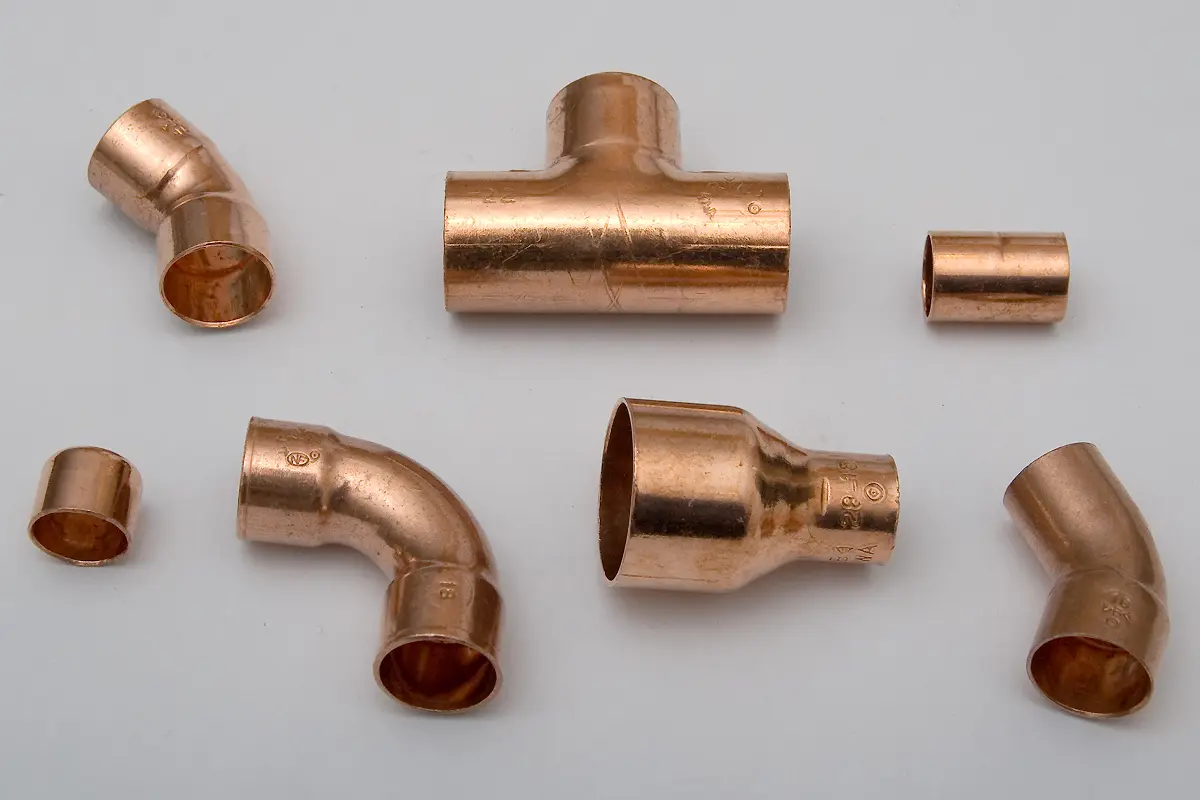
Copper pipe fittings: elbows, a tee, reducers and couplings
Copper pipe fittings: elbows, a tee, reducers and couplings. Photo: Torsten Bätge, CC BY-SA 3.0, via Wikimedia Commons.
Lateral ownership
Owner's, from the house to and including the wye at the main
Sale inspection
Homes 50+ years old, Chapter 10.13, enforced since May 8, 2015
Water sources
SFPUC, North Coast County Water District and city wells
Sewage treatment
South San Francisco/San Bruno plant, run by South San Francisco

Permits and local rules

San Bruno code that shapes a lateral or street job

  1. Chapter 10.13: inspection and correction upon sale

    Adopted as Ordinance 1822 in 2014, the chapter covers residential property originally built 50 years or more before the deed transferring it is recorded. The owner pays for the video, the city reviews it, and any repair or replacement it finds necessary is completed and approved before a certificate of compliance issues and title transfers. Exempt: condominium and co-op units except on conversion, laterals shared with another property, transfers paying no county transfer tax, five years after a certificate, and twenty years after a complete replacement the city accepted.

    City of San Bruno Municipal Code (opens in a new tab)
  2. Encroachment permits past the property line

    Because the owner's lateral runs to the wye on the main, a repair under the sidewalk or street is the owner's to fund and permit. San Bruno needs an encroachment permit for any work in the public right-of-way, which it describes as the sidewalk, curb and gutter, planting strip, driveway cut and street, and everything built under one must be done by a licensed contractor with the State of California. The city waived the permit fee only for laterals its own contractor replaced in the Avenues project.

    City of San Bruno Public Works (opens in a new tab)
  3. Sewer lateral information: ownership and maintenance

    The city's lateral page puts it plainly: owners own the entire lateral from the home to the point where it meets the main, typically in the street, and that includes the wye connection; all repairs to the upper and lower sections are theirs. Lateral maintenance by the city starts only with an approved, permitted cleanout in the correct setback, and ends whenever staff find the pipe cannot be maintained.

    City of San Bruno Public Works (opens in a new tab)

State license for this work: C-36 Plumbing, C-42 Sanitation System. Look up a contractor's license on the CSLB website (opens in a new tab).

Free request

Describe the plumbing job once. Local pros who take work in San Bruno reply by call or text.

  • No fee to request, and no obligation to hire
  • You agree scope and price with the pro you choose
  • Photos help them quote without a first visit

Get quotes for plumbing work in San Bruno

Two short steps. A local pro who takes this work calls or texts you back.

To send a request, call or text (415) 449-8213.

Free to request, and you agree the scope and price with the person you hire before work starts. In California, a job over $1,000 in labor and materials, or one that needs a building permit, must be done by a contractor licensed by the CSLB in the right class. Ask for the license number and check it at cslb.ca.gov.

The houses here

Bay-flat blocks from the 1920s, hill tracts from the 1950s

San Bruno's 2014 Sewer Master Plan describes a city built in two layers. The oldest parts, mostly east of El Camino Real plus the southern end west of it, grew in the early 1900s, and their sewers went in from the 1920s through the 1940s. The western hills filled in during the 1950s and 1960s, as post-war tracts such as Mills Park, Rollingwood and Crestmoor climbed into hills that rise past 600 feet in Crestmoor and past 700 in Portola Highlands. Vitrified clay is the main material in the public system, which the plan counted as serving about 11,000 private laterals. Every house built in those post-war decades is now past the 50-year line the sale rule uses.

Part by part

Two parts of San Bruno with their own pipe story

  • The Avenues

    East of the Caltrain tracks and south of I-380, the 2014 master plan found mains of mostly 5- and 6-inch pipe laid on very flat slopes, a constant maintenance burden. The Avenues 2-1 and 2-2 project then laid about 13,100 feet of new sewer under 2nd through 7th Avenues, San Bruno Avenue and Pine Street before repaving, and the city warned that opening those freshly paved streets later can bring penalties.

  • Crestmoor, Rollingwood and Portola Highlands

    These hill tracts sit high in a water system the city runs through 13 pressure zones and 31 regulating stations, most fitted with valves that step water down from high zones to lower ones. In the December 1972 freeze, Crestmoor fell to 20 degrees against 24 at the airport, and some water pipes broke around the area.

The work

Where San Bruno pipe work usually begins

  1. The sale video the city reviews

    Any person or company may shoot the video, but the city's compliance FAQ spells out what the recording must show: color footage, the address and the date, the cleanout or access point the camera went in through, a running footage or time counter, and a pause at every joint. It has to cover the whole lateral from the structure to the connection on the city main and identify any property-line cleanouts along the way. Fuzzy or incomplete footage can be returned for a new recording.

  2. The upper lateral after the city rebuilt the main

    When the Avenues 2-1 and 2-2 project replaced sewer mains, owners on those blocks could have their lower lateral, from the property line to the main, replaced by the city's contractor; sign-ups were due by July 15, 2025. The upper section, between the property line and the foundation, including laterals running to the rear of a home, was never part of that program. Replacing it takes a building permit from the Building Division and a contractor the owner chooses.

  3. A cleanout that gets the lower lateral maintained

    San Bruno repairs no part of a private lateral, but once a city-approved, permitted cleanout sits within the correct setback, it places the lower portion in a maintenance program: clearing blockages where possible and cutting roots or treating them with chemical root foam. When staff decide the pipe can no longer be maintained, it goes back to the owner to repair. The 2014 master plan describes the same arrangement for laterals in the public right-of-way that have an approved cleanout.

  4. Downspouts and area drains piped into the sewer

    Rain gets into San Bruno's sewers. The 2014 master plan found wet-weather flows peaking at about 3 to more than 15 times dry-weather flow, several areas above 10, and pointed to smoke testing and enforcement against illegal connections such as roof and area drains. The city has since run smoke testing in the Avenues. A downspout or yard drain found tied into a lateral is exactly the kind of inflow the city wants out of the sanitary sewer.

  5. Garage water heaters to the city handout

    San Bruno's replacement handout bars water heaters from bedrooms, bathrooms and their closets. In a garage the heater must be a flammable-vapor-ignition-resistant type, or be raised so its ignition source sits 18 inches up, and it needs bollards where a car could reach it. A pan with a drain goes under any heater placed where a leak could damage wood framing, and the permit comes before the work, with a final inspection once it is in.

Before you hire

What to settle with whoever works on a San Bruno lateral

  • Will the video run from the house all the way to the wye on the main, stopping at every joint as the city's FAQ asks?
  • For work under the sidewalk or street, who pulls the encroachment permit, and does the contractor hold a California license?
  • Does the quote add a permitted cleanout at the correct setback, so city crews will maintain the lower lateral?
  • If the street out front was just repaved, has the plumber asked Public Works about opening new pavement?
  • Look up the C-36 Plumbing license number at cslb.ca.gov before you sign anything.

Timing

Order the video before the listing goes up

The certificate is due before title transfers, and any repair needs a permit and a city inspection before it issues, so the camera work belongs at the start of a sale. If it cannot be done in time, the owner can ask the Public Services Director in writing for a time extension certificate of up to 180 days, which comes with a fee and a deposit held in escrow; the transfer itself stays legal either way. A certificate already issued is good for five years.

Questions

What San Bruno sellers and owners ask about their pipes

Our San Bruno house was built in 1980. Do we need a lateral certificate to sell it this year?

Not yet. Chapter 10.13 covers residential property originally built 50 years or more before the deed transferring it is recorded, and a 1980 house is still short of that. Once a house crosses the line, the rule reaches private sales and inter-family transfers too, not only homes listed on the MLS, and a bank-owned property is no exception.

Does a San Bruno condo need its own sewer lateral certificate?

No. Units in condominium and cooperative apartment buildings are exempt, as are properties whose lateral is shared with another property. The exemption ends when a building is being converted to condominiums or a co-op, and a detached house on its own lateral is covered once it reaches 50 years.

The blockage is under the street. Isn't that the city's pipe?

Not in San Bruno. The owner owns the whole lateral, upper and lower, including the wye where it joins the city main, and every repair to it is the owner's. If the lateral has a permitted cleanout at the correct setback, city crews will clear and root-treat the lower section for as long as they judge it can be maintained.

We joined the Avenues lateral program. Do we still need a video to sell?

Yes. The program replaced only the lower lateral and came with no compliance certificate, since the certificate covers the entire pipe. The city keeps post-construction video of the lower laterals its contractor replaced, but a seller still has to supply camera footage of the upper lateral with the application.

Where does San Bruno's tap water come from?

Three places: water bought from the San Francisco Public Utilities Commission, surface water bought from North Coast County Water District, and groundwater from the city's own wells. BAWSCA's figures show the well share swinging widely from year to year, and the city is replacing an inactive well at Commodore Park so it can lean less on SFPUC water, particularly in drought years.

Plumbing work in San Bruno? Tell us what you see.

One request reaches local handymen and contractors who take this work. The Handyman SF connects you with them; it does not do the work.

HandymanNow for handymen Work in San Bruno? Get job leads by text. Pick your trades and areas, take only the jobs you want. No subscription. Start getting leads HandymanNow for homeowners Get the HandymanNow app. Send a request with photos, message your handyman and follow them on the way. Download the app

HandymanNow app

Fix it faster. Find work faster.

Homeowners send a job with photos and follow their handyman on the map. Handymen get local jobs by text and take only the ones they want.

Call Get a quote